The Best Eco-Friendly Laundry Detergents We Tested

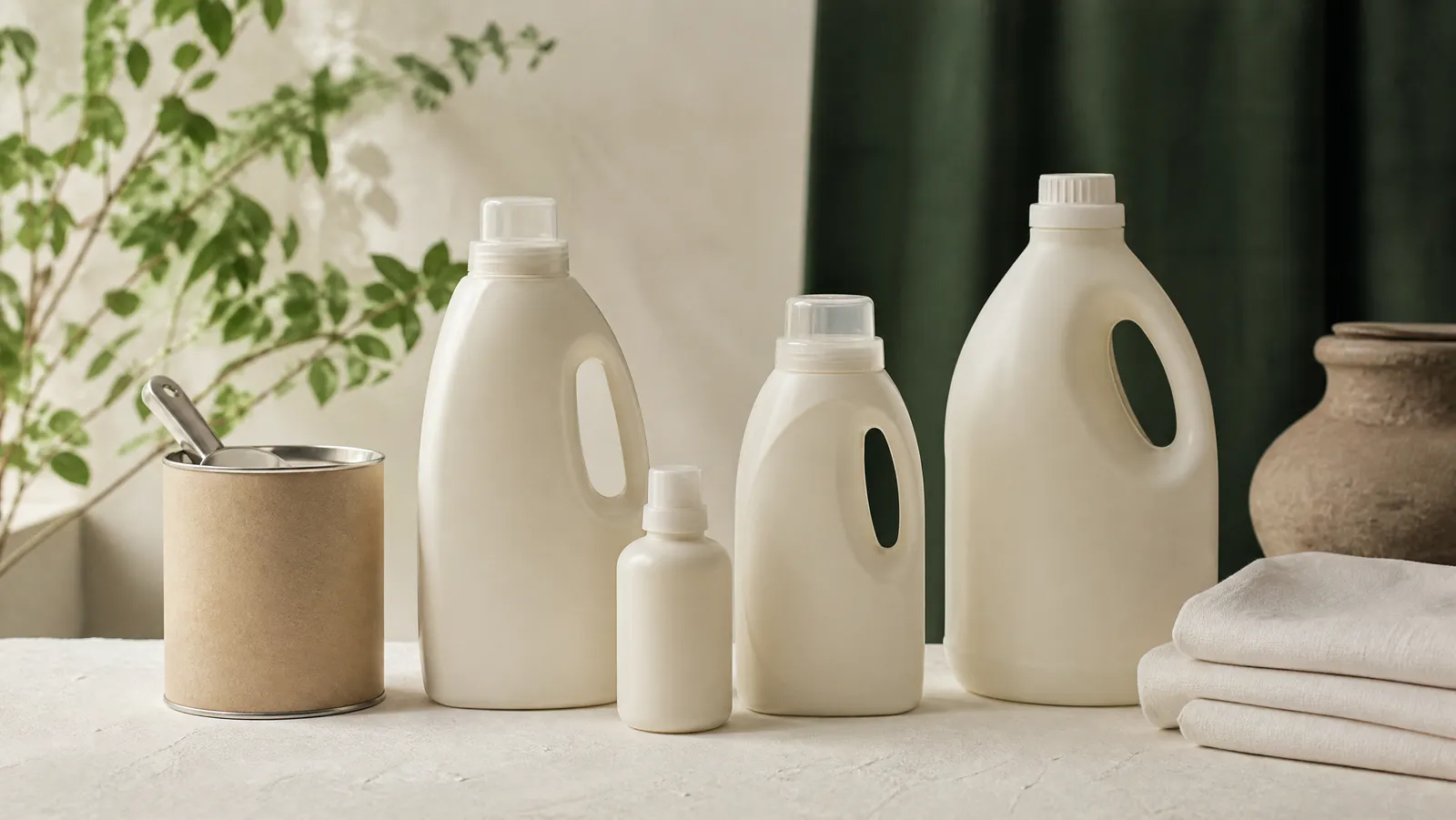
The best eco friendly laundry detergent for you depends on which promise you are buying. Meliora if you want the plastic gone entirely, ECOS if you want the cheapest bottle with a real certification, Seventh Generation if you want a concentrate that doses itself, ATTITUDE if fragrance is the problem, Biokleen if you wash for a full house. Eco-Friendly Review is reader-supported, so if you buy through our links we may earn a small commission, at no extra cost to you.
That split is not hedging. "Eco-friendly" on a detergent bottle is four separate promises wearing one label: safer ingredients, less packaging, less plastic, and a formula that still gets a shirt clean. Almost nothing wins all four at once. So we picked one detergent per job and named the trade-off out loud every time, which is the same approach we take across the rest of our eco-friendly laundry coverage.
Eco friendly laundry detergent is four promises wearing one label
Pull those four promises apart and the marketing stops being confusing.
- Safer ingredients. This is what most certifications actually address. It is a chemistry question, and it says nothing about the bottle.
- Less packaging. A concentrate does not change the chemistry at all. It changes how much plastic and water you ship per wash.
- No plastic. A different claim again. A concentrate reduces plastic; only powder in paper and metal eliminates it.
- It has to clean. The promise everyone assumes and almost nobody verifies. Two of the five programs on this page require evidence of it. The other three do not.
The reason this matters is that shoppers treat the four as a package deal. They are not. A detergent can be screened down to the last fragrance component and still ship in a rigid plastic jug. A detergent can arrive in a paper box and never have been checked against a single toxicological endpoint. When we call something the best eco laundry detergent for a given job, we mean it wins one of these four, and we will tell you which three it does not.
What we mean when we say we tested these
We did not run a controlled stain-removal test, and we are not going to pretend otherwise. There is no lab bench here, no soil swatches, no colorimeter.
What we did do is handle all five in a normal laundry room: measuring and dosing them, watching powder dissolve in a cold fill, checking whether the caps and scoops drip, weighing how the packaging behaves when it is nearly empty, and doing the division that tells you what a load actually costs. That last part is the most useful thing in this article and the thing manufacturers never print.
So: where a claim about cleaning power appears below, it is the manufacturer's claim and we say so. Where a number about cost appears, it is our arithmetic and we show the working. We also quote no star ratings and no review counts anywhere in this piece, because our product data source does not supply them and we will not invent them.
Best plastic-free: Meliora Laundry Powder
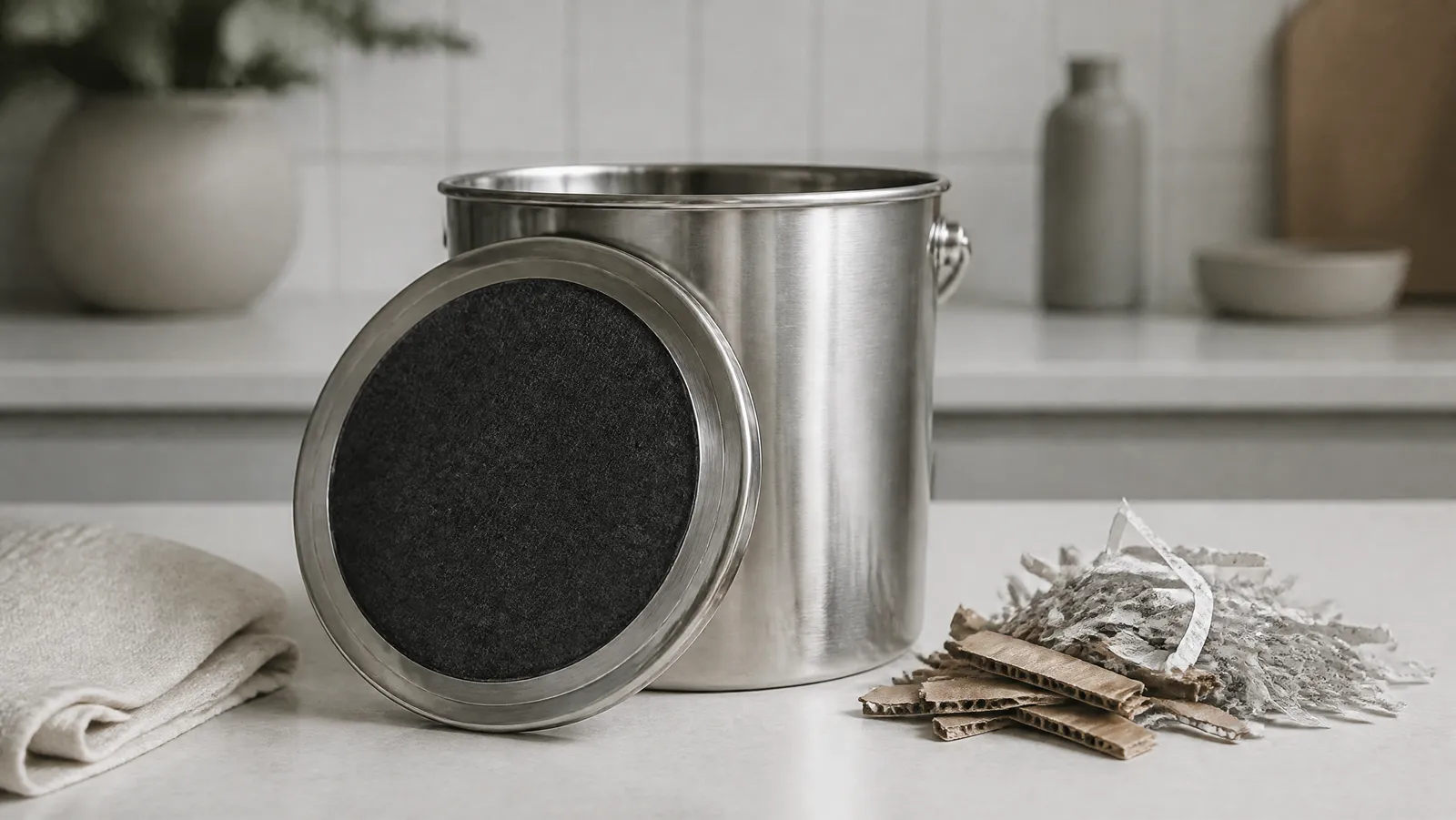
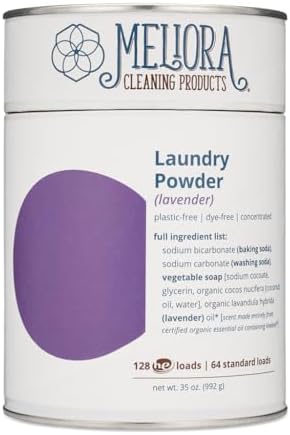
If your actual goal is "no more plastic jugs," Meliora's laundry powder is the only pick here that finishes the job. It arrives in a paper and steel canister with a stainless steel scoop, or as a paper refill box. No jug, no pod, no sheet, no liner, no wrapper.
The ingredient list Meliora prints is short enough to read out loud: baking soda, washing soda and organic coconut oil-based soap, with organic essential oils in the scented versions. The maker's dosing is half a tablespoon per HE load, one tablespoon for a standard machine, and the canister is rated for 128 HE loads.
Run that: 25.44 dollars divided by 128 HE loads is about 20 cents a load as of August 2026. That is respectable, but note the asterisk nobody mentions. In a standard, non-HE washer you double the dose, so you get 64 loads, and the same canister now costs about 40 cents a load. Powder people rarely tell you that the per-load figure is machine-dependent.
The trade-off: powder is fussier than liquid. It wants to be added to the drum rather than a dispenser drawer, and it wants water that will dissolve it, which in a very cold fill means giving it a moment. And if you route your washer's greywater onto plants, see the greywater note further down, because washing soda and baking soda are both sodium salts.
Best budget: ECOS Free and Clear
The cheapest credible option here is ECOS Free and Clear, which lands 100 loads across two 50 fl oz bottles. 9.99 dollars divided by 100 loads is about 10 cents a load as of August 2026, the lowest number on this page.
What separates it from a shelf full of green-looking bottles is that it carries EPA Safer Choice, a certification run by a government agency rather than the brand's own marketing department. ECOS also says the formula is plant-powered, vegan, pH-balanced, dermatologist-tested and free of parabens and phosphates, and that its liquid detergents are made in a carbon- and water-neutral, TRUE Platinum Zero Waste factory running on renewable energy. Those factory claims are the company's, not ours.
The trade-off is the obvious one: it is two plastic jugs. If your priority is getting plastic out of the laundry room, this is the wrong pick and Meliora is the right one. This is the budget pick, chosen honestly as the budget pick, and it is the one we would hand someone who is switching from a mainstream detergent and does not want to feel the change in their grocery bill.
Best concentrate: Seventh Generation EasyDose
Concentration is the most underrated plastic strategy in this category because it asks nothing of you. Seventh Generation's EasyDose puts 66 loads into a 23.1 fl oz bottle. 10.57 dollars divided by 66 loads is about 16 cents a load as of August 2026.
Seventh Generation states that this bottle is 60% less plastic, 50% less water and 75% lighter than its own 100 fl oz bottle. That figure gets quoted online as though it were an industry statistic, so be precise about what it is: a brand comparing its own new bottle to its own old bottle. It is a real reduction against a real baseline, and it is not a claim about detergents in general.
The other thing this bottle fixes is over-pouring. The EasyDose cap is designed to dispense one load per flip and squeeze, which removes the eyeballed glug that wastes detergent and leaves residue in clothes. The brand describes the formula as advanced-enzyme, made with no dyes, fragrances or artificial brighteners.
The trade-off: it is still plastic, just less of it, and the small bottle empties fast enough that a big household will be repurchasing often. Concentration reduces the problem. It does not remove it.
Best for sensitive skin: ATTITUDE Unscented
If someone in the house reacts to fragrance, ATTITUDE's unscented liquid is the pick, and the reason is EWG VERIFIED rather than the word "natural" on the front. ATTITUDE says the formula is 98% naturally derived, runs in conventional and HE machines at any water temperature, handles whites and colors, and is vegan and cruelty-free.
Now the number, because we promised to be blunt about it. 17.99 dollars divided by 40 loads is about 45 cents a load as of August 2026, which is roughly four and a half times the ECOS figure and easily the worst cost per load here. You are paying for the ingredient screening and the fragrance-free formulation, and that is a defensible thing to pay for if your skin makes the decision for you. It is not a good deal if it does not.
The trade-off, then, is pure economics plus one more thing worth saying: "unscented" is a formulation choice, not a certification, and no seal on any of these bottles can tell you how a detergent will handle your particular stains. The next section explains exactly what EWG VERIFIED does and does not cover.
Best for big households: Biokleen
If you run several loads a day, buying small is the expensive habit. Biokleen's 300-load container is the answer, and the maths is the argument: 41.96 dollars divided by 300 loads is about 14 cents a load as of August 2026. That is second only to ECOS, and it arrives as one container rather than six.
Biokleen describes the formula as 3X concentrated specifically to cut packaging, waste and energy, built on plant-derived cleaning agents with biodegradable ingredients, no artificial fragrances or dyes, and no phosphates, chlorine, ammonia or brighteners. It works in standard and HE machines, which matters when a household has more than one washer between it.
The trade-off is the sticker and the shelf. Forty-two dollars is the largest single payment on this page, the jug is heavy and awkward to pour from when full, and 300 loads is a genuinely long commitment. A two-person household doing four loads a week would take well over a year to get through it. Bulk is only an eco choice if you finish it; a half-used jug at the back of a cupboard is worse than three small bottles you actually emptied.
Cost per load is the number no plant based laundry detergent prints
Here is the whole page in one currency, all figures from August 2026 prices and the load counts each maker states.
- ECOS: 9.99 divided by 100 = about 10 cents
- Biokleen: 41.96 divided by 300 = about 14 cents
- Seventh Generation: 10.57 divided by 66 = about 16 cents
- Meliora: 25.44 divided by 128 HE loads = about 20 cents, or about 40 cents in a standard washer
- ATTITUDE: 17.99 divided by 40 = about 45 cents
Two honest caveats. First, "loads" is a manufacturer's unit, and it assumes you dose the way the label says, which most people do not. Over-pour by 50% and every number above moves by 50%. That is the strongest practical case for an auto-dosing cap or a measured scoop. Second, prices move constantly, so treat the ranking as more durable than the cents.
What a non toxic laundry detergent certification actually verifies
The seals on these bottles are not interchangeable, and most shoppers assume each one means more than it does. Here is what each program actually checks.
EPA Safer Choice is the broadest of them. According to the EPA's Safer Choice label page, every ingredient must meet criteria for human health and the environment covering carcinogenicity, reproductive and developmental toxicity, aquatic toxicity and environmental persistence; labeled products must also pass category-specific performance standards and perform comparably to conventional products, meet pH limits that reduce skin and eye irritation risk, and have their packaging reviewed against sustainability criteria. That performance requirement is the unusual part, because most eco seals stop at chemistry, and on this page only one other program asks for the same kind of evidence.
EWG VERIFIED runs on a different rulebook for cleaners than it does for cosmetics, and the cleaning one is what applies to a laundry detergent. According to EWG's licensing criteria for cleaning products, a verified product cannot contain chemicals EWG links to health or environmental harm, must publicly disclose every intentionally added ingredient including fragrance components and colorants, and the manufacturer must follow good manufacturing practices. The part most write-ups miss is that it also has a performance bar: EWG's criteria require demonstrated efficacy, state that a product must perform comparably to a conventional, nationally recognized product in its category, and specify that a laundry detergent must meet the user requirements of test method HCPA DCC-14 or an EWG-approved equivalent. What it is not is a packaging or carbon standard.
MADE SAFE is the deepest chemical screen of the group. According to MADE SAFE, products are screened against a Banned and Restricted List of over 15,000 substances, covering known or probable carcinogens, endocrine disruptors, developmental, neurological and reproductive toxins, flame retardants, high-risk pesticides, toxic solvents and harmful VOCs, with attention to impacts on soil, sediment, air, water and aquatic and terrestrial life. Again: a chemistry verdict, not a cleaning verdict.
B Corp is not about the product at all. According to B Lab, the B Impact Assessment scores a company across governance, workers, community, environment and customers, and evaluates the whole business rather than any specific product or product line. The familiar "80 points to certify" threshold is being retired: B Lab closed Version 6 of the assessment to recertifying companies after June 2025 and began certifying on new standards in 2026, which replace the single score with mandatory requirements across seven impact topics. Either way, a B Corp can sell a mediocre detergent.
Leaping Bunny is narrower still and admirably specific. According to the Leaping Bunny program, certification means no animal testing at any stage of the supply chain, including ingredients sourced from suppliers, with annual recommitment and independent audits. It makes no claim whatsoever about ingredient safety, packaging or performance.
So Meliora's stack of MADE SAFE, Leaping Bunny and B Corp answers "were the chemicals screened, were animals harmed, is the company run decently." It does not answer "will this shift a collar stain." Different seals, different questions.
Why no detergent sheet made this list
Sheets have become one of the most visible formats in this category and the obvious candidate for a plastic-free pick, so their absence needs explaining.
The short version is that we could not resolve the packaging question to our own satisfaction in time to rank them alongside these five. The paper mailer is real, but the film chemistry inside is where the argument lives, and that deserved its own piece rather than a paragraph. We wrote it up separately: here is our full look at whether laundry detergent sheets are actually plastic-free. That roundup is now live: here are the best laundry detergent sheets, ranked with the same cost-per-load arithmetic we used here.
If you want a plastic-free option you can buy today without waiting on that verdict, powder in a paper and metal canister is the format with the least ambiguity.
Phosphates, brighteners and what ends up in the water
"Phosphate-free" appears on almost every bottle here, and it is worth knowing that it is mostly a legacy badge in the United States. According to the USGS, US manufacture of phosphate detergent for household laundry ended voluntarily in about 1994, after many states had established phosphate detergent bans. So a phosphate-free laundry detergent in 2026 is telling you something that has been broadly true of American laundry detergent for three decades. It is not a lie; it is just not a differentiator.
Optical brighteners are the live issue. They do not clean anything. They deposit on fabric and fluoresce to make whites look whiter, and they are designed to stay on the cloth, which is the opposite of what you want in a wastewater stream. According to greywater guidance compiled by Brad Lancaster at HarvestingRainwater.com, whiteners are on the list of ingredients to avoid entirely in soaps and detergents destined for greywater reuse.
That same greywater guidance is where the Meliora caveat comes from. It warns against boron and borax outright, notes that sodium and other salts are a particular problem in arid soils that are already salty, recommends liquid over powdered products, and suggests seeking out potassium-based formulas because potassium is a plant nutrient. If you irrigate with your laundry water, a sodium-carbonate powder is the wrong tool no matter how good its packaging is. Pick a liquid instead. This is exactly the kind of trade-off that gets lost when "eco-friendly" is treated as one undifferentiated virtue.
Wash cold, and let the detergent do the work
If you change one thing after reading this, make it the dial, not the bottle. According to ENERGY STAR, the EPA-run efficiency program, water heating consumes about 90% of the energy it takes to operate a clothes washer, and unless you are dealing with oily stains washing in cold water will generally do a good job of cleaning. The Department of Energy's Energy Saver laundry guidance separately tells you to wash in cold water using cold-water detergents whenever possible.
That last clause is the part people skip. Cold performance is a formulation property, driven largely by enzymes that stay active at low temperatures, which is why Seventh Generation's advanced-enzyme claim and ATTITUDE's all-temperature claim are worth noting even though we cannot independently verify either. A detergent that struggles in cold water quietly pushes you back to warm cycles, and then the greenest-looking bottle in the house is costing you the 90%.
Two habits that cost nothing: fill the drum properly rather than running half loads, and dose to the label instead of by eye. Both stretch every figure in the cost-per-load list above.
The bottom line
There is no single best eco friendly laundry detergent, only the right answer to the promise you care most about. Meliora if you want the plastic gone and you have an HE machine. ECOS if you want the cheapest load with a certification that actually checks cleaning. Seventh Generation if you want a concentrate that stops you over-pouring. ATTITUDE if fragrance sensitivity makes the decision and you accept 45 cents a load. Biokleen if the household is big enough to empty a 300-load jug.
Pick the promise first, then the bottle. Then wash cold, dose to the label, and stop buying the small size. When you are ready to take the rest of the laundry routine apart, from dryer sheets to stain removers to what to do with the jug you already own, it is all mapped in our complete eco-friendly laundry guide.
What we tested
The only pick with no plastic in the packaging just paper steel and a metal scoop
- Material
- Powder & Plant-Based Liquids
- Credentials
- Safer ChoiceConcentrated
Genuinely plastic-free packaging with no jug, pod, sheet or wrapper anywhere, a short ingredient list printed on the label, and dosing small enough that one canister is rated for 128 HE loads.
No major drawbacks noted in testing.
The only pick on this page with no plastic anywhere in the packaging. Meliora ships a paper-and-steel canister with a stainless steel scoop, and lists the formula as baking soda, washing soda and organic coconut oil-based soap, with organic essential oils in the scented versions. At half a tablespoon per HE load, one canister covers 128 loads, which is the arithmetic that makes the sticker price defensible.

The cheapest credible bottle here with EPA Safer Choice behind it
- Material
- Powder & Plant-Based Liquids
- Credentials
- Safer ChoiceConcentrated
The lowest cost per load on this page and the only pick backed by a government-run certification that reviews cleaning performance as well as ingredients.
No major drawbacks noted in testing.
The lowest-cost way onto this list that still carries a real third-party mark rather than a self-declared one. ECOS is EPA Safer Choice certified, and the brand says the free and clear formula is plant-powered, vegan, pH-balanced, dermatologist-tested and free of parabens and phosphates. The honest catch is the packaging: 100 loads arrive as two 50 fl oz plastic jugs.

66 loads in a 23 1 fl oz bottle with a cap that doses itself
- Material
- Powder & Plant-Based Liquids
- Credentials
- Safer ChoiceConcentrated
Auto-dosing removes the guesswork that makes people over-pour, and the small bottle is the least disruptive plastic reduction on this list. Made with no dyes, fragrances or artificial brighteners.
No major drawbacks noted in testing.
Concentration is the most practical way to cut laundry plastic without changing anything about your routine. Seventh Generation puts 66 loads in a 23.1 fl oz bottle and states that is 60% less plastic, 50% less water and 75% lighter than its own 100 fl oz bottle. The EasyDose cap meters one load per squeeze, which quietly fixes the most common way people waste detergent.

EWG VERIFIED and unscented for households that react to fragrance
- Material
- Powder & Plant-Based Liquids
- Credentials
- Safer ChoiceConcentrated
A genuinely unscented formula backed by an independent ingredient screen, which is the combination fragrance-sensitive households usually struggle to find in one bottle.
No major drawbacks noted in testing.
The differentiator here is EWG VERIFIED, a third-party ingredient screen rather than a marketing phrase. ATTITUDE says the unscented formula is 98% naturally derived, works in conventional and HE machines at any water temperature, and is vegan and cruelty-free. Be clear-eyed about the cost: 40 loads in 67.6 fl oz is the most expensive way to wash a load on this page.

One 300 load jug instead of six small ones
- Material
- Powder & Plant-Based Liquids
- Credentials
- Safer ChoiceConcentrated
Near the lowest cost per load here, and the packaging maths is simple: one big jug replaces a shelf of small ones. Works in standard and HE machines.
No major drawbacks noted in testing.
One large container instead of a long run of small ones is the cleanest version of the bulk argument, and 300 loads is a lot of bottles you never buy. Biokleen describes the formula as 3X concentrated to reduce packaging, waste and energy, with plant-derived cleaning agents, biodegradable ingredients and no artificial fragrances, dyes or brighteners. It only makes sense if your household will actually finish it.
The top three, compared
| Spec | Best Plastic-FreeMeliora Laundry Powder (Lavender) | Best BudgetECOS Laundry Detergent Liquid, Free & Clear (100 loads) | Best ConcentrateSeventh Generation EasyDose Ultra Concentrated, Free & Clear |
|---|---|---|---|
| Verdict | Solid | Fair | Fair |
| Composite | 3.6/5 | 3.0/5 | 3.0/5 |
| Materials | 3.7 | 3.0 | 3.0 |
| Health | 3.7 | 3.2 | 3.2 |
| Durability | 3.5 | 3.0 | 3.0 |
| End-of-life | 3.2 | 2.8 | 2.8 |
| Price | — | — | — |
| Get it | Check price | Check price | Check price |
How we score
What it’s made of.
Chemistry you’ll touch.
How long it lasts.
Where it goes after.
Each pick scores 0–5 on the four axes above, weighted into the composite verdict at the top. Scores are derived from what a product is verifiably made of and certified as — not how green its label looks.
About the author
Ruth Lopez
I'm Ruth Lopez and I'm a lover of nature and the environment. I'm very passionate about finding eco friendly products that don't damage the environment and also support companies that have the same philosophy.