Natural Stain Removers That Actually Lift the Stain

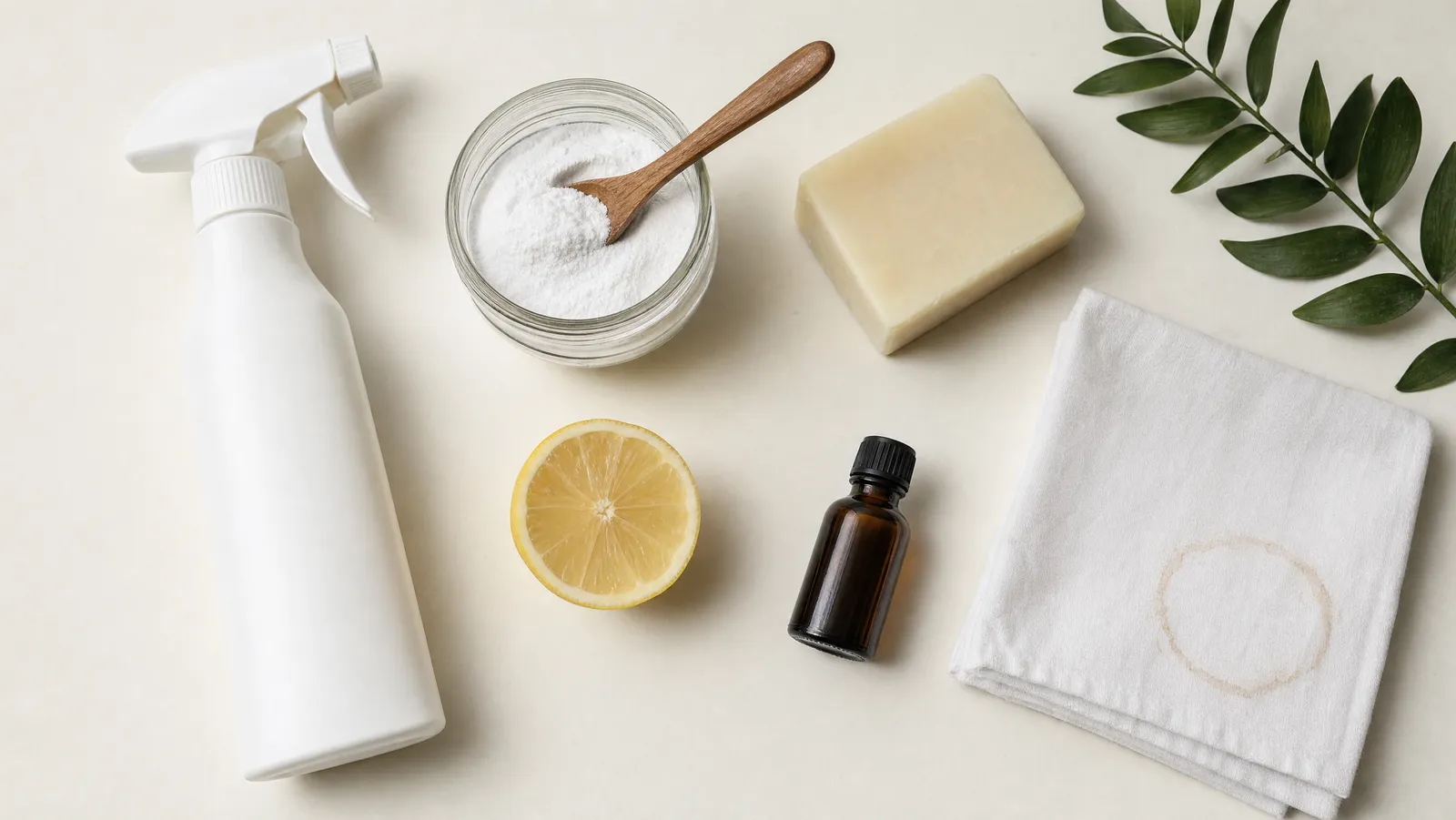
A natural stain remover only works when it matches the chemistry of the stain. Protein needs cold water and enzymes. Oil needs a surfactant. Tannin needs oxygen bleach or an acid. Pigment needs a solvent, and sometimes nothing at all. Match the class and a pantry shelf will out-clean a boutique bottle. Miss it and nothing on the shelf helps. Eco-Friendly Review is reader-supported, so if you buy through our links we may earn a small commission, at no extra cost to you.
So this guide is organised by stain class, not by ingredient. A list of pantry tricks only rescues the stains somebody happened to write about; learn the four classes and you can solve the ones we never mention. That is the whole point of building a lower-waste laundry routine rather than buying a new bottle every time something spills.
The first sixty seconds matter more than the stain remover you buy
The least popular advice here is that most stain outcomes are decided before any product is involved.
- Blot, do not rub. The University of Kentucky Cooperative Extension's stain removal guide for washable fabrics is blunt: blot liquid stains immediately with an absorbent material, and avoid excessive rubbing, which "may break the fiber, damage the finish, remove the color, or spread the stain."
- Cold water on anything you cannot identify. The same guide says to avoid hot water on unidentifiable stains and start them with a cold soak, the least destructive option.
- Do not dry it until the stain is gone. Extension guidance is to rinse and inspect before drying, and repeat if removal is incomplete. A dryer cycle or an iron turns a removable stain into a permanent one.
- Fresh beats clever. No product recovers the week it spent in the hamper.
How to remove stains naturally starts with four chemical classes
Extension guides sort stains by the treatment they respond to, not by what spilled:
- Protein — blood, sweat, milk, egg, grass, mud, baby food, pet accidents. Cold water plus enzymes. Heat is the enemy.
- Oil and grease — cooking oil, butter, salad dressing, hand lotion, collar rings. A surfactant to emulsify the fat, plus the hottest water the fabric tolerates.
- Tannin — coffee, tea, wine, beer, berries, fruit juice, soft drinks, tomato juice. Detergent and hot water when fresh, oxygen bleach or an acid when old.
- Pigment and dye — ink, permanent marker, mustard, cosmetics, dye transfer. Solvent, and honestly, sometimes nothing.
Plenty of real stains are combinations — lipstick is pigment in an oil carrier, gravy is protein plus fat plus starch. Treat the protein first, cold, because the heat that dissolves the grease locks the protein in.
Protein stains: cold water, enzymes, and never heat
The folk rule here has a real mechanism behind it. According to the University of Kentucky Cooperative Extension, if hot water hits a protein stain first, "it cooks the protein and causes coagulation between the fibers in the yarns of the fabric, making the stain more difficult to remove." The protein denatures and grips the yarn instead of sitting on top of it. That is no longer a stain; it is a small piece of cooked egg white bonded to your shirt. So: cold soak, agitate, wash warm rather than hot, rinse, inspect. If it is still there, soak again before it sees heat.
Enzymes are the other half. According to the American Cleaning Institute, ingredients ending in "-ase" are enzymes that each specialise in one soil type — protease breaks down protein stains such as grass, blood and egg; amylase handles starch stains such as pasta, potatoes and baby food; lipase works on oil-based stains such as butter and grease; and mannanase targets stains containing mannans — the gum thickeners in barbecue sauce, chocolate, ice cream and toothpaste. Those are the ones you never see going on: gum residues that can hold other soil against the fabric.
The cheapest fix is upstream. A detergent with a decent enzyme package removes most household stains in a normal cycle with no separate pre-treat, which is where we would spend the money first. We go through the options in the best eco-friendly laundry detergents we tested.
The limit to name: wool and silk are themselves protein fibres. Extension guidance on enzyme presoaks is explicit — do not use them on silk or wool, "since enzymes digest protein." The enzyme cannot tell your blouse from the stain.
Oil and grease stains need a surfactant, not a natural miracle
Oil does not dissolve in water, so soaking achieves nothing until you add something that bridges the two. That is all a surfactant does, and it is why plain dish soap is a legitimate pre-treat rather than a hack. Extension guidance for oil-based stains is to work full-strength heavy-duty liquid detergent into the stain, or use a pre-treatment spray, then wash in the hottest water safe for the fabric.
This is a class where heat works for you — warm fat emulsifies more easily — provided you have ruled out protein first. Old body-oil stains, the collar and underarm yellowing that appears after a year of cold washes, want a long soak rather than a stronger chemical.
Tannin stains and the oxygen bleach temperature nobody mentions
Fresh tannin stains, according to the Kentucky extension guide, usually come out by laundering in detergent and hot water as safe for the fabric. It is the old ones that need bleaching, and that means oxygen bleach — which is where most home attempts quietly fail. Sodium percarbonate is a solid carrier for hydrogen peroxide: dissolve it and it releases hydrogen peroxide and washing soda. A 2022 paper in the journal Materials on activated percarbonate bleaching notes that conventional peroxide bleaching of cotton runs close to boiling, around 95 degrees C for 45 minutes, and that bleach activators exist precisely because peracids formed in the wash oxidise stain pigments at temperatures where peroxide alone is sluggish. The detergent-chemistry literature on bleach activators puts the practical floor for unactivated peroxide near 60 degrees C, which is why European powders carry TAED, so that bleaching still works in the 40 to 60 degrees C range where peroxide alone is slow.
In a laundry room that means a scoop of oxygen bleach in a cold soak does very little bleaching. If percarbonate has "not worked" for you, temperature is the likeliest reason, followed by not giving it long enough. Use hot tap water, dissolve it fully before the fabric goes in, and give it hours rather than minutes.
The limits to name: oxygen bleach is an oxidiser, and wool and silk are protein fibres that oxidisers attack. Care labels routinely exclude both, and we would not put either through a hot, alkaline, multi-hour percarbonate soak. Dose matters more than a flat yes or no — the Kentucky guide calls dilute 3 percent hydrogen peroxide safe for all fibres if you test dyed fabric for colourfastness first, a different proposition from an hours-long hot soak. For all-fabric bleaches it says to test a hidden area and stop if the colour shifts.
Pigment and dye stains are the class you can lose
Ink, permanent marker, mustard, dye transfer from a red sock. Extension guidance is honest that dye stains are very difficult to remove, and lists felt-tip permanent ink with the parenthetical "may not come out." The mechanism is solvent rather than water, and the natural options thin out fast — isopropyl alcohol on ballpoint ink, glycerine to soften it first. Give a pigment stain two careful attempts, then decide whether the garment is a work shirt now. Escalating on coloured fabric usually trades a small stain for a large bleached patch.
The DIY stain remover advice that is chemistry and the advice that is folklore
Some pantry remedies are real chemistry. Some survive because they photograph well.
Baking soda and vinegar mixed together is the headline example, and it does not work. According to Nathan Kilah, a senior lecturer in chemistry at the University of Tasmania writing in The Conversation, mixing vinegar and baking soda causes an immediate reaction that "forms water, sodium acetate (a salt) and carbon dioxide — the fizzy part." What is left is the problem: sodium acetate "is an even weaker base than baking soda, so it doesn't do much to clean the surface you're trying to scrub." Kilah adds that most of these recipes use a large excess of one component or the other, and works through one popular DIY oven-cleaner recipe in which over 99 percent of the added baking soda is still there after the fizz subsides — so the cleaning is done by the leftover baking soda and the scrubbing.
The fizz is a party trick. Separately, both ingredients earn their place: sodium bicarbonate is a mild alkaline abrasive and deodoriser, good for scrubbing and absorbing odours, and acetic acid — plain white vinegar — dissolves mineral deposits like limescale, which is why it belongs on a kettle or a shower screen. Extension guidance also lists white vinegar for some old perspiration stains. Use colourless vinegar only.
Hydrogen peroxide is genuinely useful and genuinely risky. Use the 3 percent solution sold as a mild antiseptic, not the stronger solution sold for bleaching hair, and test for colourfastness on dyed fabric first. That instruction is the Kentucky guide's: apply the test to a hidden area of the garment, not the visible panel, and stop if the colour changes.
Sunlight is real photobleaching, the only stain remover with no packaging, and the one with the clearest trade-off. A 2026 study in Polymers that exposed dyed cotton to natural sunlight reported a significant colour change in one of its three samples after just 100 hours. The authors could not identify the specific dye chemistry, but attribute the effect to the oxidative and photo-induced reactions sunlight is known to initiate in dyed fibres. And phototendering — organic fibres losing strength through chain degradation caused by the ultraviolet component of sunlight — is a well-described textile problem. Hang whites out for residual yellowing, keep darks and prints indoors, and bring things in the same day.
Non toxic stain remover safety: what never to mix
This article tells you to keep several things under the sink, so we will be specific about what never meets what.
- Never combine anything here with chlorine bleach or ammonia. Bleach plus an acid such as vinegar releases chlorine gas; bleach plus ammonia releases chloramine vapours. Both are genuinely dangerous in a small laundry room.
- Do not mix hydrogen peroxide and vinegar in one bottle. That combination forms peracetic acid, an industrial disinfectant and an irritant, not a laundry product. Use one, rinse, then the other.
- Do not add an enzyme presoak to chlorine bleach. The Kentucky guide says plainly not to combine enzyme presoak products with chlorine bleaches; chlorine bleach deactivates the enzymes you are paying for.
- Rinse between steps. The Kentucky guide advises rinsing stain remover out thoroughly before laundering, to avoid undesirable chemical reactions.
Your detergent format changes what actually reaches the stain
Enzymes are proteins with real stability limits, and a detergent's format affects both what survives on the shelf and how completely the product dissolves in a cold cycle. A powder that does not fully dissolve, or a sheet that leaves residue in a cold wash, delivers less of everything you paid for. We compared the formats in how sheets pods and powder compare.
If you would rather buy one bottle than keep a shelf of ingredients
An honest caveat first: we did not run a controlled stain test. No laboratory, no standardised soiled swatches, so no basis for ranking these four on stain removal — anyone claiming one without that apparatus is guessing. What we can speak to is how they dispense and smell, how they behave as a pre-treat, what the maker actually claims, and what they cost per ounce. Prices are as of September 2026.
"Natural" is not a regulated word on a cleaning label, which is exactly why the Puracy Stain Remover Spray is our default pick despite being the priciest per ounce here at about 1.17 dollars. Puracy says it targets fresh and set-in stains including grass, red wine, makeup and oil — three of our four classes — and the listing states outright that the formula contains plant-derived, mineral-derived and synthetic ingredients. That small print is more honest than most of this shelf, and synthetic is not a slur: a well-chosen synthetic surfactant is usually the thing doing the work.
If your stains are biological, buy for the mechanism. Biokleen Bac-Out is described by its maker as a blend of live enzyme cultures, botanicals and plant-based surfactants, ready to use at full strength and marketed for pet accidents, wine, diapers and laundry. At 32 ounces it lands near 47 cents an ounce, the cheapest here. Use it the way the protein rule says to: get it on before the garment sees a hot wash or a dryer, and give it time. Enzymes are not cold-only — the Kentucky guide says enzyme presoaks work best in warm to hot water — but the heat that sets a protein stain sets it for good, so the cold soak comes first.
For set-in stains across a whole load, the format changes. The ACTIVE Enzyme Laundry Booster is a 2 lb unscented powder the maker rates at 64 loads, roughly 31 cents a load, sold as a booster alongside your detergent rather than a replacement. Its directions call for 1 to 2 scoops per load, or a pre-soak of at least an hour in warm water for set-in stains — and that soak is the real active ingredient. The marketing leans on "lab-proven" language with no published study attached, so read it as a claim, not a result. The tub-and-powder format is the plastic-relevant part: you are not paying to ship water.
If you go through pre-treat by the litre, the ATTITUDE Stain Remover Spray is 27.1 fl oz at roughly 35 cents an ounce, about a third of Puracy's per-ounce cost, and the brand offers a cardboard eco-refill for the recyclable HDPE number 2 bottle — a refill system beats a recyclable bottle alone. ATTITUDE states the formula is 98 percent naturally derived, its own figure with no published breakdown, so we would not repeat it as fact. Its label advice is the right advice: test on an inconspicuous area first.
What we would actually do
Keep one enzyme spray for protein, dish soap for grease, a tub of oxygen bleach for tannin, and 3 percent hydrogen peroxide for whites. Four things that cover almost everything a household produces.
Then do the free part properly. Blot instead of rubbing. Cold water on anything biological or unidentified. Hot water and a surfactant on grease. Hot water and hours, not a cold ten minutes, on oxygen bleach. And never put a garment in the dryer until you have checked it in good light and confirmed the stain is gone.
The rest of the routine — detergent, format, packaging, microfibres — is in our eco-friendly laundry guide.
What we tested

The one bottle to keep by the machine for stains you cannot identify
- Material
- Enzymes Oxygen Bleach & Surfactants
- Credentials
- Plant-basedStain-chemistry
Covers the widest spread of stain classes in a single bottle, and the ingredient description is more honest than most of this shelf about containing synthetics alongside the plant and mineral inputs.
No major drawbacks noted in testing.
The pick for the stain you cannot classify, which is most of them. Puracy says the spray targets fresh and set-in stains including grass, red wine, makeup and oil, and markets it as safe across fabric types from linens to upholstery when you follow the label directions. Puracy also says it is made without sulfates, parabens, bleaches or petrochemicals, and the listing is unusually candid that the formula is plant-derived, mineral-derived and synthetic. At about 1.17 dollars an ounce it is also the most expensive way to buy pre-treat on this page.
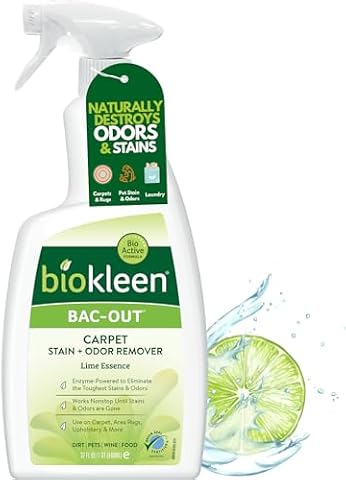
A ready to use enzyme spray aimed at the biological stains
- Material
- Enzymes Oxygen Bleach & Surfactants
- Credentials
- Plant-basedStain-chemistry
The lowest price per ounce on this page, and the only pick whose stated mechanism lines up exactly with the cold-water-and-enzymes rule for protein stains.
No major drawbacks noted in testing.
Biokleen describes Bac-Out as a blend of live enzyme cultures, botanicals and plant-based surfactants, sold full strength with no dilution. That description maps onto one specific stain class: pet accidents, diapers, sweat and blood. The company says there is no artificial fragrance, colour or preservative, and that the lime scent comes from the listed botanicals. At 32 ounces it works out to roughly 47 cents an ounce, the cheapest here by a wide margin. Made in the USA.

A powder you dissolve for the long warm soak that set in stains need
- Material
- Enzymes Oxygen Bleach & Surfactants
- Credentials
- Plant-basedStain-chemistry
Built around the pre-soak, which is the step that actually rescues set-in sweat and body oil, and the powder format ships without water or a plastic jug.
No major drawbacks noted in testing.
The only powder here, which matters if you are trying to stop shipping water in plastic. ACTIVE sells it as an enzymatic booster to run alongside your normal detergent rather than replace it, rates the 2 lb tub at 64 loads, and directs 1 to 2 scoops per load or a pre-soak of at least an hour in warm water for set-in stains. It is unscented, and the maker says it is compatible with HE, front-load and top-load machines. At the maker's own load count that is about 31 cents a load.

The big cheap bottle with a cardboard refill behind it
- Material
- Enzymes Oxygen Bleach & Surfactants
- Credentials
- Plant-basedStain-chemistry
The cheapest way to keep pre-treat spray in a house that goes through it, and the refill carton is a genuine packaging reduction rather than a slogan.
No major drawbacks noted in testing.
The volume option, at roughly 35 cents an ounce, or about a third of what Puracy costs per ounce. ATTITUDE markets it for grease, dirt, oil, fruit, cosmetic pigment and blood stains, states that the formula is 98 percent naturally derived, and says the HDPE number 2 bottle is recyclable with a cardboard eco-refill available. The brand describes the product as vegan and cruelty-free, and its own directions tell you to test on an inconspicuous area first.
The top three, compared
| Spec | Best OverallPuracy Stain Remover Spray (12 fl oz) | Best for Protein and Pet StainsBiokleen Bac-Out Stain and Odor Remover (32 oz) | Best for SoakingACTIVE Enzyme Laundry Booster Powder (2 lbs, Unscented) |
|---|---|---|---|
| Verdict | Fair | Fair | Fair |
| Composite | 3.0/5 | 3.0/5 | 3.0/5 |
| Materials | 3.0 | 3.0 | 3.0 |
| Health | 3.2 | 3.2 | 3.2 |
| Durability | 3.0 | 3.0 | 3.0 |
| End-of-life | 2.8 | 2.8 | 2.8 |
| Price | — | — | — |
| Get it | Check price | Check price | Check price |
How we score
What it’s made of.
Chemistry you’ll touch.
How long it lasts.
Where it goes after.
Each pick scores 0–5 on the four axes above, weighted into the composite verdict at the top. Scores are derived from what a product is verifiably made of and certified as — not how green its label looks.
About the author
Ruth Lopez
I'm Ruth Lopez and I'm a lover of nature and the environment. I'm very passionate about finding eco friendly products that don't damage the environment and also support companies that have the same philosophy.