The Best Shampoo Bars We Tested for Every Hair Type

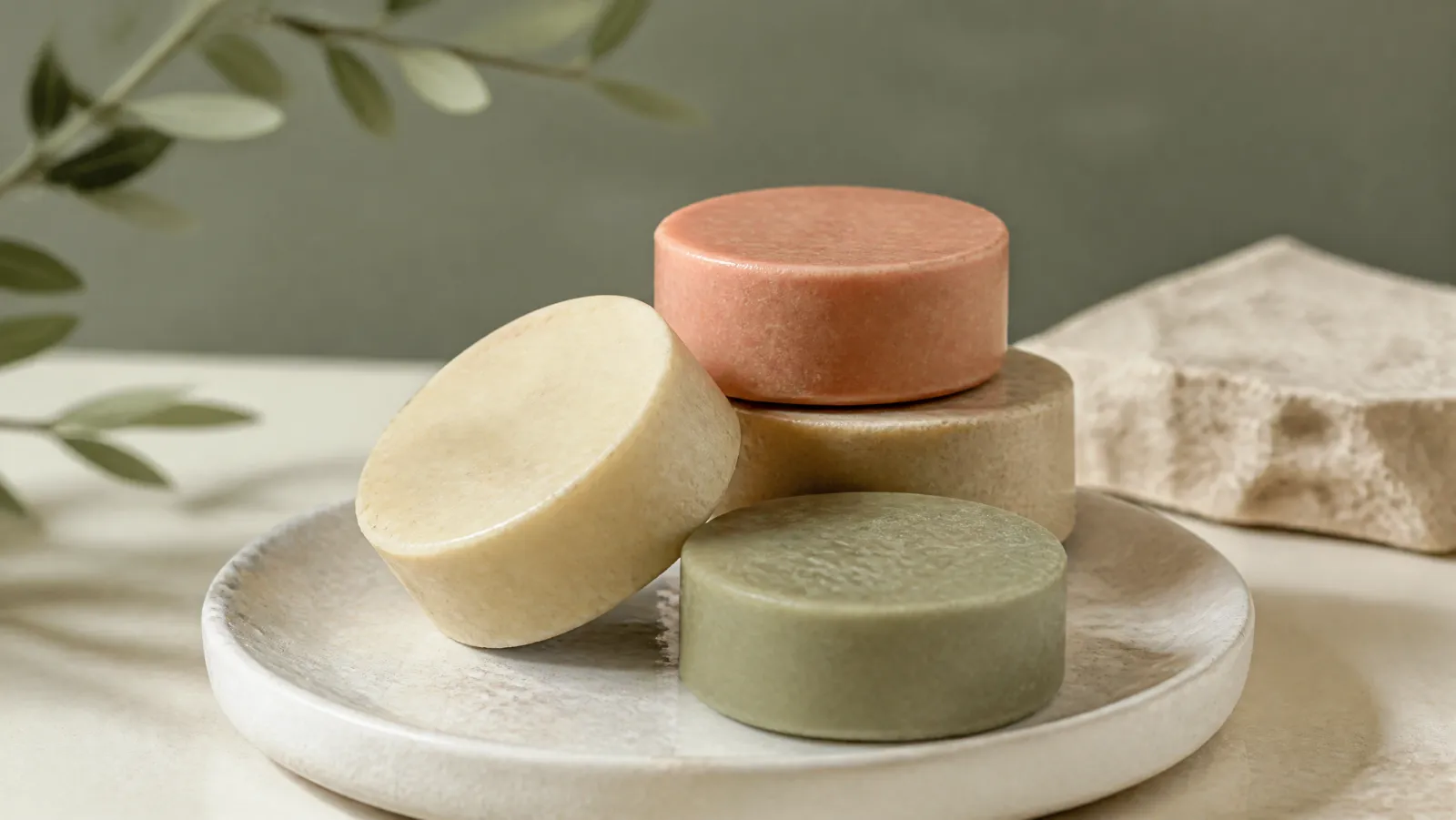
The best shampoo bars clean as well as a bottle, last two to three times longer, and lift a small mountain of plastic out of your shower routine, as long as you match the formula to your hair. After weeks of testing across fine, oily, and thick hair in hard water, our best overall is Viori's Hidden Waterfall rice-water bar, with separate winners for fine hair, oily scalps, volume, and tight budgets.
A quick note before we get into it: Eco-Friendly Review is reader-supported, so if you buy through our links we may earn a small commission, at no extra cost to you. That never changes which bars we recommend or what we say about them.
A shampoo bar is usually the first thing we hand people who are building a low-waste bathroom, and you can see the full sequence of swaps we suggest in building a low-waste bathroom. It is a small, cheap change with an outsized payoff: one bar, no pump bottle, and a shower shelf that is suddenly a lot emptier. The catch is that bars are not interchangeable. A formula that makes fine hair look full can leave a thick, oily scalp feeling coated, so the "best" bar really does depend on your hair.
Why a zero waste shampoo bar is the easiest first swap
The bottle problem is bigger than it looks. According to Lochtree's roundup of plastic-waste data, roughly 550 million shampoo bottles are thrown away in the United States every year, and the average American gets through about 11 bottles of shampoo annually. Recycling does not rescue most of them; widely cited research led by UC Santa Barbara's Roland Geyer finds that only about 9% of all the plastic ever made has actually been recycled. Every bottle you never buy is one that never has to be sorted, shipped, or landfilled.
Bars punch above their size because they are not watered down. According to Plantish, liquid shampoo is roughly 70 to 80 percent water, while a solid bar is concentrated with little to no added water. That concentration is why a bar lasts so long: according to a shampoo bar versus liquid comparison guide from Elemental Wellness, a quality bar runs about 60 to 80 washes and replaces two to three standard bottles, where a 400 ml bottle typically lasts most people only 30 to 40 washes.
A zero waste shampoo bar is also just an easy habit to keep. There is no pump to fight, it will not leak in a gym bag, and it pairs naturally with the other painless first swaps, like trading disposable razors for the best safety razors for a plastic-free shave. Start with the bathroom staples you already replace on a schedule and the switch mostly makes itself.
How we tested these shampoo bars
We are a testing bureau, not a hype machine, so here is exactly what "tested" means. We used each bar for at least two weeks on real heads spanning fine, medium, thick, color-treated, and oily-scalp hair, in a home with moderately hard water, because water chemistry is where a lot of bars quietly fall apart.
For every bar we tracked the same things: how fast it lathered, whether it rinsed clean or left a film, how the hair felt dry the next morning, and how the bar itself held up sitting wet between washes. We noted scent and how long it lingered, since a scent that vanishes by the time your hair dries is a common letdown.
One honest limit: we cannot independently verify longevity or "equals X bottles" figures in a two-week window, and the Amazon data we source these picks from does not include star ratings, so we do not quote any. Where a number comes from the maker, we say so and treat it as a claim, not a tested fact.
The best shampoo bars for every hair type
No single bar wins for everyone, so we split the field by the problem each one solves. The cards below have current pricing and the buy links; here is why each earned its spot.
Best overall: Viori Hidden Waterfall Rice Water Shampoo Bar
If you buy one bar and never think about it again, make it Viori's Hidden Waterfall bar. It solves the single biggest complaint about solid shampoo, which is the thin, hard-to-spread lather; this one whips up fast and feels much like bottled shampoo in the hand. Viori says the formula is sulfate-free and built on rice water, vitamins, and nourishing oils, and markets it for volume and density with a musky-sweet vanilla scent. In our testing it rinsed clean across most hair types with no waxy residue, which is the hurdle that ends a lot of people's bar experiments. The honest downside is the scent: it is pleasant but soft, and it faded on us within a day, so do not expect an all-day perfume. As of July 2026, it runs around $12.
Best for fine and thinning hair: The Earthling Co. Volumizing Bar
Fine hair is the hardest case for a bar, because anything too rich flattens it. Shampoo bars for fine hair need to clean and add body without leaving conditioning weight behind, and this pH-balanced bar threads that needle. The Earthling Co. says it is free of sulfates, parabens, and silicones, made in the USA, and leans on marshmallow root and elderberry for strength and volume, with glycerin and vitamin B5 for lightweight moisture. That sulfate-free approach matters here for a reason beyond marketing: according to dermatologists cited by NBC News Select, sulfates can strip the hair and scalp of natural protective oils, and gentler cleansers tend to be kinder to fragile strands. In our notes it added real lift at the roots without the greasy look richer bars can leave. It is the priciest bar here, though, at around $19 as of July 2026.
Best for oily scalp: Kitsch Clarifying Tea Tree & Mint
If your scalp is greasy by the afternoon or holds onto styling product, you want something clarifying, and the tea-tree-and-mint bar delivers a deep, tingly clean without the squeaky over-strip of a harsh detox shampoo. Kitsch says it is pH-balanced, free of parabens, sulfates, and silicones, color-safe, and that users see reduced oiliness after about four uses; the brand also markets one bar as the equivalent of two 16 oz bottles. We would treat the four-uses figure as a maker's claim rather than a promise, but the immediate fresh-scalp feel is real. The one caution: a clarifying bar used every single day can start to feel drying, so rotate it with a gentler wash if your ends run dry.
Best for volume: Kitsch Rosemary & Biotin
Rosemary and biotin are the internet's favorite pairing for fuller-looking hair, and this bar is a sensible, low-cost way to try it. Kitsch says it uses rosemary extract, biotin, and amaranth protein for fullness, and that it is pH-balanced, vegan, cruelty-free, and USA-made. We will be plain here: we did not test any hair-growth claims and would not make them, and the science on topical rosemary and biotin for hair loss is not something we can stand behind. What we can say is that it left hair soft with a bit of extra body and a pleasant, not overpowering rosemary scent. Take it as a nice volumizing everyday bar, not a treatment.
Best budget: ANIHANA Manuka Honey & Almond
The cheapest bar we would actually recommend is light, pleasant, and, unusually, wrapped in packaging you can compost at home. ANIHANA says it is free of SLS, SLES, parabens, and silicones, made in New Zealand, and lasts around 80 washes per bar, which the brand puts at about three liquid bottles. At around $10 as of July 2026, the value math is easy even if that washes figure runs optimistic for long or thick hair. The clean is on the lighter side, so very oily scalps may want the Kitsch clarifying bar instead, but for most people this is a genuinely good, genuinely affordable starting point.
Shampoo bar vs bottle: what actually changes
The shampoo bar vs bottle question comes down to three practical differences. First, plastic: a bar usually arrives in a cardboard sleeve or compostable wrapper instead of a rigid bottle, so the packaging waste all but disappears. Second, cost over time: because bars are concentrated and, per the Elemental Wellness guide above, outlast bottles by roughly two to three times, the higher sticker price tends to even out or come out ahead per wash.
Third is the day-to-day feel, and this is where honesty matters. A bar takes a few extra seconds to work up, the lather is often lighter than a sulfate-heavy bottle, and you have to store it somewhere it can dry between uses or it turns to mush. Travel, on the other hand, is a clear win: a solid bar is not a liquid, so it sidesteps carry-on limits and cannot leak. For most people the trade is worth it. If you wash daily, have very long hair, or share a shower with a crowd, keep expectations realistic on how fast a single bar disappears.
Sulfate-free shampoo bars and reading the label
Most of the bars we recommend are marketed as sulfate-free, and the label is worth understanding rather than taking on faith. A sulfate free shampoo bar swaps the harsh detergents (like SLS) that create that big, foamy lather for milder cleansers. According to dermatologists cited by NBC News Select, sulfates are effective cleansers but can strip natural oils, which is why they can leave some hair dry or irritated. According to eSalon, sulfate-free formulas are also generally gentler on color-treated hair, since aggressive surfactants can lift the cuticle and speed up fading.
There is a chemistry fork worth knowing about, too. According to Beauty Disrupted, solid shampoos split into true soap bars, which sit high on the pH scale around 9 to 10, and syndet bars, which use synthetic detergents at a hair-friendly pH of roughly 4.5 to 5.5, the same range as liquid shampoo. Beauty Disrupted notes that traditional soap bars react with the minerals in hard water and can leave a waxy film, while syndet bars mostly do not. If you have hard water, a pH-balanced syndet-style bar (which is how the picks here are marketed) is the safer bet.
The adjustment period and the "waxy" phase
If your first week on a bar feels off, you are not doing it wrong, and you are not alone. Some of the "transition" people describe is really the soap-versus-syndet issue above: a high-pH soap bar in hard water can genuinely leave a coating. Some of it is your hair adjusting after you stop using silicone-heavy products, as that old buildup lifts and hair can briefly feel heavier or duller. According to Karmic Skin, scalps that were used to aggressive sulfate shampoos may also keep overproducing oil for a few weeks before settling down.
The fix is usually chemistry, not willpower. A diluted apple cider vinegar rinse is a widely recommended way to cut mineral and product buildup in hard-water areas, and it is the first thing we would try if a bar feels waxy. Give any new bar a couple of weeks before you judge it. We have a full walkthrough on how to switch to a shampoo bar for anyone who wants the step-by-step; the short version is that patience and an occasional rinse solve most complaints.
How to use a shampoo bar
Technique is half the battle, and it takes about thirty seconds to learn. According to ZeroWasteStore, start with hair that is thoroughly soaked in warm water, which softens the bar and opens the cuticle so the lather spreads. Then pick one of two methods.
- Palm-lather (best for fine or tangle-prone hair): rub the wet bar between your hands to build a light foam, then work that foam into your roots with your fingertips.
- Direct application (best for thick hair): glide the wet bar over your scalp in a few strokes, focusing on the roots rather than the lengths, then massage it in.
Either way, use fingertips and not nails, spend a minute or two working the scalp, and rinse well. Afterward, set the bar somewhere it can drain and dry, like a slatted dish or a rack, so it lasts its full life instead of dissolving on a wet shelf.
The bottom line
There is no universal best bar, but there is a best bar for your hair. Viori's Hidden Waterfall is the safest all-rounder and the one we hand first-timers; reach for The Earthling Co. if your hair is fine or thinning, the Kitsch tea-tree bar for an oily scalp, the Kitsch rosemary-and-biotin bar for everyday volume, and the ANIHANA bar if you want the lowest price and compostable packaging. Match the formula to your hair, give it two weeks, and keep a diluted vinegar rinse on hand if your water is hard.
Then keep the momentum going. A shampoo bar is one swap; the rest of the routine is just as easy to de-plastic, and you can map out every step in our complete zero waste bathroom guide.
What we tested

A sulfate free rice water bar that lathers like liquid shampoo and suits almost every hair type
- Material
- Solid Shampoo Bars
- Credentials
- Plastic-freeSulfate-free
Lathers quickly, rinses without residue, and lasts far longer than a bottle. The easiest, lowest-drama entry into solid shampoo we tested.
No major drawbacks noted in testing.
Viori's rice-water bar is the one we would hand a first-timer. It builds a fast, bottled-shampoo-like lather, rinses clean, and works across most hair types without the waxy film that turns people off bars. Viori says the formula is sulfate-free and made with rice water, vitamins and nourishing oils.

A pH balanced volumizing bar aimed squarely at fine flat and thinning hair
- Material
- Solid Shampoo Bars
- Credentials
- Plastic-freeSulfate-free
Adds noticeable lift to fine hair and does not leave the greasy roots some richer bars can. The lightweight moisture is a good match for fragile strands.
No major drawbacks noted in testing.
If your hair is fine or thinning, this pH-balanced bar adds body without weighing strands down. The Earthling Co. says it is free of sulfates, parabens and silicones and made in the USA, and leans on marshmallow root and elderberry for the feel of fuller, stronger hair.

A clarifying tea tree bar for oily scalps and product build up
- Material
- Solid Shampoo Bars
- Credentials
- Plastic-freeSulfate-free
Cuts oil and build-up well and leaves the scalp feeling fresh. A little goes a long way, so the bar lasts even on frequent washers.
No major drawbacks noted in testing.
For scalps that get greasy fast or hang onto styling build-up, the tea-tree-and-mint formula gives a deep, tingly clean without the squeaky over-stripping of a harsh clarifier. Kitsch says it is pH-balanced and free of parabens, sulfates and silicones, and that it is color-safe.

A rosemary and biotin bar formulated for volume and everyday strengthening
- Material
- Solid Shampoo Bars
- Credentials
- Plastic-freeSulfate-free
Leaves hair soft with a bit of extra body, and the rosemary scent is pleasant without being overpowering.
No major drawbacks noted in testing.
Rosemary and biotin are the buzzy pairing for fuller-looking hair, and this bar delivers respectable lift and softness for the price. Kitsch says it uses rosemary extract, biotin and amaranth protein, and that it is vegan, cruelty-free and made in the USA.

An affordable lightweight bar with home compostable packaging
- Material
- Solid Shampoo Bars
- Credentials
- Plastic-freeSulfate-free
Great value, lasts a long time, and the compostable wrapper matches the zero-waste goal better than most bars in this price range.
No major drawbacks noted in testing.
The cheapest bar we would actually recommend: light on the hair, pleasant to use, and wrapped in packaging you can compost at home. ANIHANA says it is free of SLS, SLES, parabens and silicones, made in New Zealand, and lasts around 80 washes per bar.
The top three, compared
| Spec | Best OverallViori Hidden Waterfall Rice Water Shampoo Bar | Best for Fine & Thinning HairThe Earthling Co. Volumizing Shampoo Bar (Sweet Sandalwood) | Best for Oily ScalpKitsch Clarifying Tea Tree & Mint Shampoo Bar |
|---|---|---|---|
| Verdict | Solid | Solid | Solid |
| Composite | 3.4/5 | 3.9/5 | 3.4/5 |
| Materials | 3.4 | 4.7 | 3.4 |
| Health | 3.9 | 3.9 | 3.9 |
| Durability | 3.0 | 3.7 | 3.0 |
| End-of-life | 2.8 | 2.8 | 2.8 |
| Price | — | — | — |
| Get it | Check price | Check price | Check price |
How we score
What it’s made of.
Chemistry you’ll touch.
How long it lasts.
Where it goes after.
Each pick scores 0–5 on the four axes above, weighted into the composite verdict at the top. Scores are derived from what a product is verifiably made of and certified as — not how green its label looks.
About the author
Ruth Lopez
I'm Ruth Lopez and I'm a lover of nature and the environment. I'm very passionate about finding eco friendly products that don't damage the environment and also support companies that have the same philosophy.