The Best Safety Razors for a Plastic-Free Shave

The Best Safety Razors for a Plastic-Free Shave
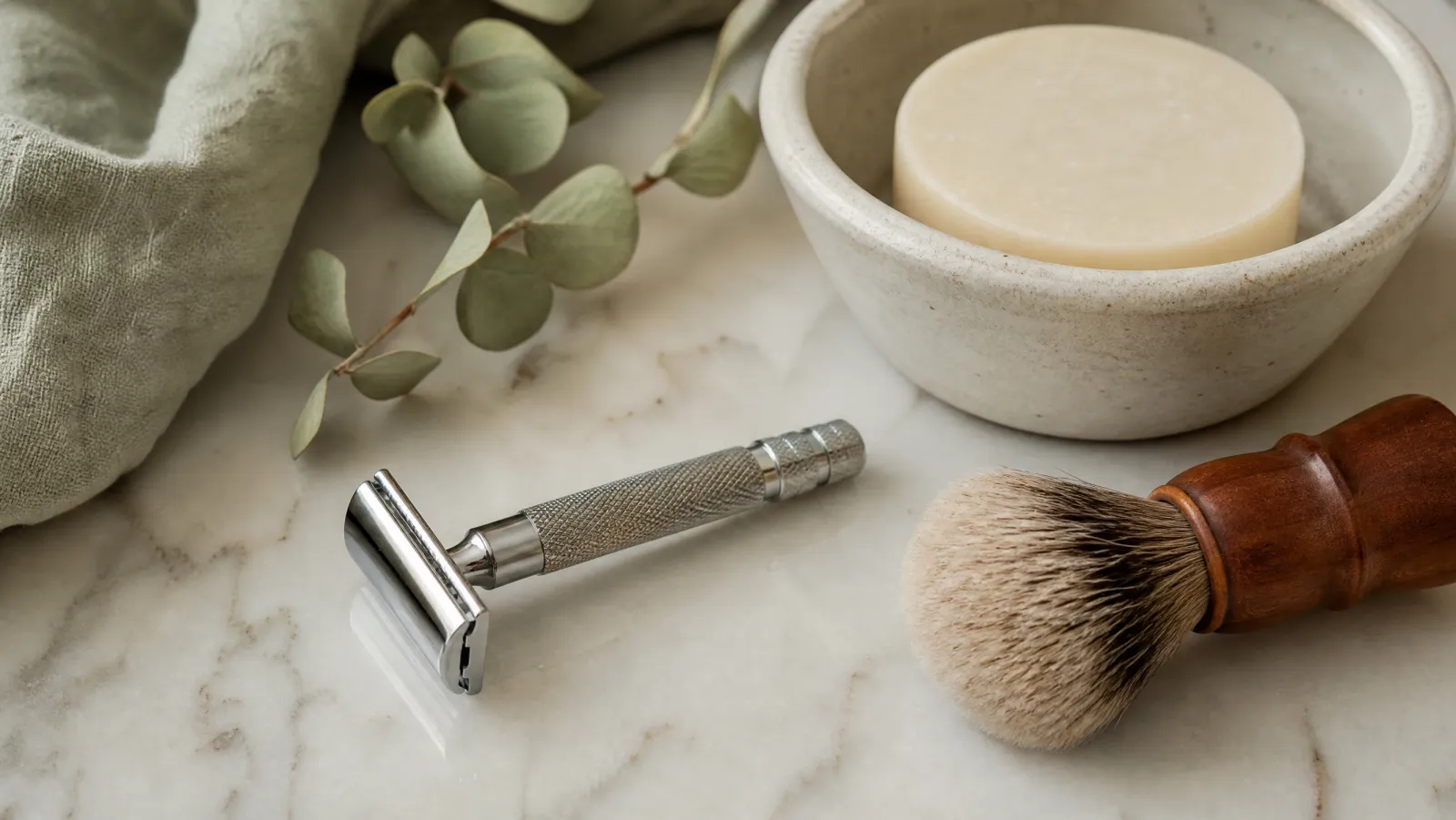
The best safety razor for most people is the Bambaw Double Edge: a mild, all-metal handle that costs less than a month of cartridge refills and, with reasonable care, lasts for decades. We tested five double-edge (DE) razors for a genuinely plastic-free shave, and this guide covers which one fits which shaver. (Eco-Friendly Review is reader-supported. If you buy through our links we may earn a small commission at no extra cost to you.)
A safety razor is, in our experience, the single easiest high-impact swap in a zero waste bathroom. One metal handle replaces a lifetime of plastic cartridges and throwaway sticks, and unlike most eco swaps, it costs you less over time rather than more. The catch is a short learning curve: DE blades are sharp, the technique is different from a cartridge, and the first week takes some attention. We will be honest about that, and about who should probably not switch.
Every razor here is metal or bamboo, takes standard double-edge blades, and was chosen because it does one job well. Below are our picks, the waste-and-money math behind the switch, and a plain guide to shaving without nicking yourself.
Why a safety razor is the easiest plastic-free shaving swap
Disposable and cartridge razors are built to be thrown away, and the numbers reflect it. An often-cited 1990 U.S. Environmental Protection Agency estimate put the number of disposable razors Americans discard at roughly 2 billion a year; as EcoWatch notes, the EPA has not updated that figure since and no longer tracks it, so the real total today is almost certainly higher. What is current is the spending: according to The Washington Post, citing market-research firm Euromonitor, more than $1.2 billion in disposable razors were sold in the U.S. in a single recent year. Nearly all of that is plastic and mixed metal that cannot be recycled through curbside programs.
A safety razor breaks the cycle in the simplest possible way. You buy one handle, and from then on the only thing that leaves your bathroom is a small, flat piece of recyclable steel. There is no plastic cartridge, no blister pack, no lubricating strip. Pair it with the best shampoo bars and you have covered two of the highest-impact first swaps in the room, both of which happen to be cheaper long-term than what they replace. If you are budgeting the whole room at once — the sort of thing we cover in how to build a zero waste bathroom on a budget — the razor is notable for being the swap that actually pays you back.
Safety razor vs. disposable: the waste and the math
The money is the part that surprises people, so let us do it plainly.
The handle is a one-time cost. After that you buy blades, and blades are cheap. According to WhollyKaw's cost breakdown, double-edge blades run on the order of 10 cents each, versus roughly $2 to $5 for a single cartridge refill. Because a DE blade is a simple stamped piece of steel and a cartridge is a molded plastic assembly, that gap is structural, not a sale price.
Add it up over a normal shaving routine and the numbers get lopsided. According to the same WhollyKaw breakdown, a safety-razor setup works out to about $0.24 per shave against roughly $0.67 for a cartridge system, which pencils out to around $507 less over five years and a setup that pays for itself in about 26 weeks. Your exact figures depend on how often you shave and which blades you settle on, but the direction is never in doubt: cartridges are the expensive habit, and the razor is the frugal one.
The short version: a safety razor costs more up front (most of ours land between about $13 and $83) and far less forever after. That is the opposite of how most eco swaps feel, and it is why we push this one hardest.
What to look for in a double edge safety razor
All five razors here take the same universal DE blades, so the choice comes down to feel, not compatibility. Four things matter:
- Aggression (mildness). A "mild" razor exposes less blade and is more forgiving; an "aggressive" one shaves closer but nicks more easily. Beginners want mild.
- Weight and balance. A heavier head lets the razor's own weight cut, so you do not press. This is the habit that prevents most beginner irritation.
- Material and build. All-metal (brass, zinc alloy, aluminum) or a bamboo handle on a metal head. These outlast plastic by an order of magnitude and are the reason the razor is a lifetime purchase.
- What is in the box. Included blades and a case lower the cost and hassle of getting started.
One thing you will not find here is star ratings. We do not publish invented scores, and the retailer data we work from does not carry verified ratings, so we describe how each razor behaves instead.
The best safety razors we tested
Here are our five picks, in the order we would recommend them for most people. Each product card below has the current price and a link; the notes are what we would tell a friend.
Best Overall Value: Bambaw Double Edge Safety Razor
The Bambaw is the razor we point most people to first, and the one we would buy again without thinking. It is a closed-comb, all-metal handle that ships with five stainless blades and takes any standard DE blade, so the only recurring cost is a few cents of steel. Bambaw markets it for a close shave with less irritation than cartridges, and in practice the head is mild and the balance forgiving — exactly what makes a first switch stick. As of July 2026 it is around $17, which is roughly the price of a single pack of premium cartridges. If you only click one link in this guide, make it the Bambaw Double Edge Safety Razor.
Best for Beginners: Vikings Blade The Chieftain
If the word "sharp" makes you nervous, start here. Vikings Blade tunes the Chieftain deliberately mild and includes five platinum-coated Swedish steel mild blades, which is the gentlest starting combination in this roundup. The maker positions it as a forgiving shave built to reduce razor burn, and the two-piece all-metal design is straightforward to load. The included hard case is the detail that sets it apart: it is the razor we would actually toss in a dopp kit. As of July 2026 it is around $25.
Best Budget: SOBIY Bamboo-Handle Safety Razor
The SOBIY exists to remove the last excuse. At around $13 as of July 2026 and shipping with ten blades and a protective cover, it is the cheapest way to find out whether wet shaving is for you, and it comes with enough blades (roughly fifty to seventy shaves' worth) to get well past the learning curve before you buy more. The natural bamboo handle sits on a weighted zinc-alloy head, and that head weight is doing the real work — it is the razor that most physically discourages you from pressing. It takes standard DE blades like the rest.
Best Classic: Merkur 34C Heavy-Duty Double Edge Razor
The Merkur 34C is the razor other razors get compared to. It is a chromed-brass, closed-comb, two-piece design made in Germany, with a short, heavy handle that trades reach for control. The pedigree is real: according to Merkur's company history, the brand was founded in Solingen in 1896 and has been stamping its razors "Made in Solingen" since Emil Hermes's sons took over in the late 1920s. The 34C shaves with a confident, controlled closeness and is built to be handed down. As of July 2026 it is around $52 — mid-priced, but effectively a buy-it-once purchase.
Best Premium: Henson Shaving AL13 Aluminum Razor
The Henson AL13 is the splurge that is genuinely different rather than just prettier. Henson machines it from aluminum and exposes a fixed 30-degree blade angle with very little blade free-length; according to the company, this is done at its aerospace facility to the same AS9100 standards used for satellite components, and it is what braces the blade so tightly that there is almost no flex. Henson credits that rigidity for a smoother, lower-irritation shave, and while we can only report the maker's engineering claims, the result is an unusually forgiving razor for how close it cuts. Open channels make it easy to rinse. As of July 2026 it is around $83.
How to shave with a safety razor without nicking yourself
This is where beginners either fall in love or give up, so read this before your first shave. Two things separate a smooth DE shave from a bloody one, and both are easy to fix.
Angle. According to WhollyKaw's technique guide, you want the blade at roughly 30 degrees to your skin — shallow, not steep. A reliable way to find it: lay the top cap flat against your cheek with the handle sticking straight out, which is too flat to cut, then tip the handle down slowly until the blade just starts to engage the stubble. That is your angle.
Pressure. Use almost none. The razor's weight is enough to cut, so your hand only guides it. WhollyKaw notes that pressing is what causes the nicks and burn people blame on the blade; a cartridge trains you to push, and unlearning that is most of the skill.
Beyond that: shave with the grain on the first pass rather than against it, keep your skin taut, go slowly, and use plenty of lather. Expect a short adjustment period — a weeper or two in the first week is normal as your hand learns the angle, and it settles quickly. DE blades are legitimately sharp, so change them before they drag and store them out of reach of kids. This is technique, not medical advice; if your skin reacts badly to any razor, stop and reassess.
Who should not switch? If you want a 90-second shave in the shower with zero learning curve, or you simply do not enjoy the ritual, a cartridge razor may suit you better, and that is a fair call. The safety razor rewards people willing to slow down for a week.
Blades, recycling, and staying low-waste
A safety razor is only fully low-waste if you deal with the used blades responsibly, and loose blades do not belong in the trash or the recycling bin. The standard solution is a "blade bank" — a small metal tin you drop used blades into. According to Jungle Culture, once it is full you can seal it and take the whole steel container to a scrap-metal recycler, since the blades are recyclable steel; a repurposed tin can works if you do not want to buy a dedicated one. The point is simple: keep the blades contained so no one handling your waste gets cut, and route the metal to actual metal recycling.
That is the whole system. One handle you keep, cheap steel blades you recycle in a tin, and no plastic in the stream at all.
The Readout: which safety razor should you buy?
For most people, buy the Bambaw — it is mild, cheap, well-built, and the easiest switch to make stick. Nervous about sharp blades? The Vikings Blade Chieftain is the gentlest start and travels well. Watching every dollar? The SOBIY gets you shaving for around $13 with blades included. Want an heirloom? The Merkur 34C is the century-old benchmark. Ready to splurge on the smoothest shave here? The Henson AL13 earns it.
Whichever you pick, the math and the waste story point the same way: one metal handle, cheap recyclable blades, and no more plastic in the bin. It is the swap that costs you less the longer you keep it. For the rest of the room, our plastic-free bathroom guide walks through the swaps worth making next, in the order that actually pays off.
What we tested

A well priced closed comb metal razor that s become the default eco pick
- Material
- Metal Double-Edge Razors
- Credentials
- ReusablePlastic-free
Comfortable and forgiving, with a weight and balance that suit first-timers, and the only ongoing cost is a few cents' worth of blades.
No major drawbacks noted in testing.
The Bambaw is the razor we hand most newcomers first. It is all-metal and fully reusable, ships with five stainless double-edge blades, and takes any standard DE blade, so the only thing you ever buy again is the blade itself. Bambaw markets it for a close shave with less irritation than cartridges, and the mild, balanced head makes it forgiving to learn on.

A milder butterfly free two piece with a travel case tuned for first timers
- Material
- Metal Double-Edge Razors
- Credentials
- ReusablePlastic-free
Gentle enough to learn on, nicely balanced, and the included hard case makes it the easiest of the group to travel with.
No major drawbacks noted in testing.
Vikings Blade tunes the Chieftain deliberately mild, which is exactly what a nervous beginner wants. It ships with five platinum-coated Swedish steel mild blades and a hard case, and the maker markets it as a gentler shave meant to cut down on razor burn. The all-metal build is reusable and the blades are recyclable.

The cheapest way in with a bamboo grip and 10 blades in the box
- Material
- Metal Double-Edge Razors
- Credentials
- ReusablePlastic-free
Surprisingly solid for the price, and the weighted head does the work so you never have to press.
No major drawbacks noted in testing.
Under fifteen dollars and packed with ten blades, the SOBIY removes the last excuse not to try a safety razor. It pairs a natural bamboo handle with a weighted zinc-alloy head, includes a protective cover, and takes standard DE blades. Bambaw-style, the ten stainless blades work out to roughly fifty to seventy shaves before you need more.

The century old German benchmark most wet shavers measure others against
- Material
- Metal Double-Edge Razors
- Credentials
- ReusablePlastic-free
Heirloom build quality and a controlled, close shave. This is the one you buy once and keep for decades.
No major drawbacks noted in testing.
The Merkur 34C is the reference razor. It is a chromed-brass, closed-comb, two-piece design made in Germany, with a heavier short handle that gives you control at minimal pressure. It takes any standard DE blade, and like the rest of the group, only the blade is ever replaced.

An aerospace machined aluminum razor engineered to nearly eliminate blade chatter
- Material
- Metal Double-Edge Razors
- Credentials
- ReusablePlastic-free
Astonishingly smooth and low-irritation once you dial in the angle, with a precise, effortless feel that justifies the splurge.
No major drawbacks noted in testing.
Henson CNC-machines the AL13 from aluminum and exposes a fixed 30-degree blade angle with very little blade free-length, which the maker says maximizes rigidity to reduce irritation. Open channels make it easy to rinse, and Henson positions it as mild and beginner-friendly despite the premium price.
The top three, compared
| Spec | Best Overall ValueBambaw Double Edge Safety Razor (Silver) | Best for BeginnersVikings Blade The Chieftain | Best BudgetSOBIY Bamboo-Handle Safety Razor |
|---|---|---|---|
| Verdict | Solid | Solid | Buy |
| Composite | 3.7/5 | 3.7/5 | 4.2/5 |
| Materials | 3.4 | 3.4 | 4.7 |
| Health | 3.9 | 3.9 | 3.9 |
| Durability | 3.9 | 3.9 | 4.6 |
| End-of-life | 3.6 | 3.6 | 3.6 |
| Price | — | — | — |
| Get it | Check price | Check price | Check price |
How we score
What it’s made of.
Chemistry you’ll touch.
How long it lasts.
Where it goes after.
Each pick scores 0–5 on the four axes above, weighted into the composite verdict at the top. Scores are derived from what a product is verifiably made of and certified as — not how green its label looks.
About the author
Ruth Lopez
I'm Ruth Lopez and I'm a lover of nature and the environment. I'm very passionate about finding eco friendly products that don't damage the environment and also support companies that have the same philosophy.