Bamboo vs Recycled Toilet Paper and Which Is Greener

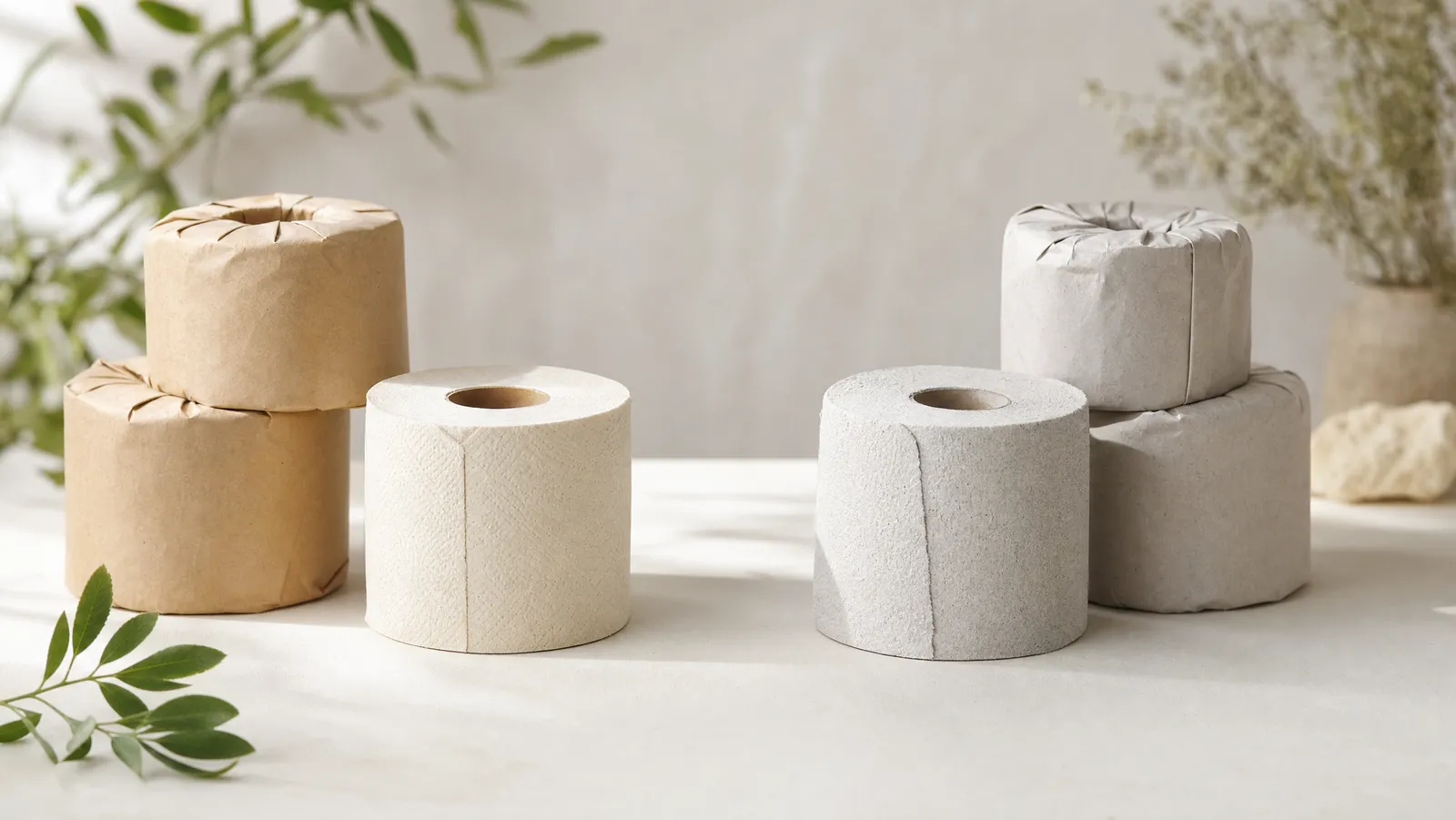
Recycled toilet paper is the greener buy. Bamboo toilet paper is the comfort compromise. Both of them beat virgin tree pulp, which is still what most of the aisle sells. If you want the smallest footprint, buy 100% recycled with a high post-consumer number. If thin sheets are what makes you quit, buy bamboo and stop feeling bad about it. Eco-Friendly Review is reader-supported, so if you buy through our links we may earn a small commission, at no extra cost to you.
That is the answer, and it took sixty words. The rest of this is why — because "tree-free" and "recycled" are both doing a lot of unearned work on packaging right now, and because toilet paper is one of the few things a household buys, uses once and flushes every single week. That volume is what makes it a load-bearing swap in a plastic-free bathroom rather than a symbolic one. We put three bamboo rolls against three recycled rolls, checked each label claim against its source, and did the per-sheet math on every pack.
What the footprint data actually says about bamboo vs recycled toilet paper
Start with the thing both camps beat. According to NRDC, whose Issue with Tissue series has graded tissue brands annually since 2019, the Canadian boreal is a major source of northern bleached softwood kraft pulp — the grade of virgin softwood pulp US tissue mills favour most. NRDC's most recent scorecard, the seventh edition, scored 152 products: 36 earned A or A+ grades on the strength of recycled content, and 80 landed on D or F for still leaning on forest fibre. That is the baseline: a lot of the famous-brand aisle is clearcut boreal, converted into a product with a service life of about four seconds.
Now the comparison you came for. NRDC reports that tissue made from recycled content has roughly one-third the carbon footprint of virgin-fibre tissue, a figure it takes from the Environmental Paper Network's Paper Calculator. Bamboo sits in between. NRDC's read is that bamboo fibre has a smaller environmental footprint than virgin forest fibre but a larger one than recycled fibre, and it grades bamboo brands mainly on two things: whether the bamboo is FSC-certified, and how the sheet is bleached. That ordering shows up in the grades themselves — NRDC's scorecards have put 100%-recycled lines from Seventh Generation and 365 by Whole Foods Market in the top A tier, while FSC-certified 100% bamboo brands including Caboo and Reel land a rung below at B.
So: recycled first, bamboo second, virgin last. Nothing we found argues with that ordering.
Tree-free is not the same as low-carbon
Here is the honest knock on bamboo, and it is not the one people expect. Most bamboo tissue sold in the US is grown and milled in China, which is a general characteristic of the category rather than a fault of any one brand — the mills are where the bamboo is, which is also why the leading life-cycle work on bamboo tissue models Chinese production.
Researchers at North Carolina State University put numbers on what that means. According to a life-cycle analysis led by Naycari Forfora with Ronalds Gonzalez, published in Cleaner Environmental Systems in September 2025, bamboo-containing tissue produced in China was responsible for about 2,400 kg of CO2 equivalent per ton, against 1,824 kg per ton for wood-based tissue made in the US. The culprit is not the ocean freight. As Forfora put it, "because the Chinese power grid is so reliant on coal for power, emissions throughout the entire tissue supply chain are higher than what we saw with the wood-based option." The team also found those differences largely disappeared when bamboo was processed on a clean grid.
Two things follow. First, "tree-free" tells you what the fibre is not, not what the energy was. Second, that study compared bamboo against virgin wood tissue — it is not a defence of Charmin, and it says nothing that improves recycled fibre's position. Recycled still wins.
Where bamboo genuinely wins
We are not going to stage a fake draw, but bamboo earns real points:
- Feel. Three-ply bamboo is simply nicer than most 2-ply recycled. The Amazon Aware 3-Ply Bamboo Toilet Paper is the cheapest way to test that for yourself, and it carries an FSC certification (FSC N004130) at supermarket money.
- No de-inking step. Bamboo pulp starts clean. Recycled pulp has to have somebody else's ink taken out of it first.
- It regrows without replanting. Caboo describes its bamboo as organically grown and regenerating within two years, and the general agronomy supports the shape of that claim: published bamboo research describes stands where only mature culms are cut while the rhizome network stays in the soil, with culms reaching harvestable maturity somewhere between roughly three and six years depending on the species, and moso plantations in China commonly worked on an alternating "on-year / off-year" cycle that puts felling on a two-year rhythm. Treat any specific figure on a wrapper as the brand's, not a measurement.
- It is easy to buy in bulk. The Caboo Tree-Free Toilet Paper 24-double-roll box exists precisely so the swap survives contact with a busy household.
Where recycled genuinely loses
And the reverse, because pretending otherwise is how people end up back on Charmin:
- Thinner sheets. Most recycled rolls are 2-ply, and recycled fibre is shorter than virgin fibre, so the sheet has less to give.
- Occasional lint. Some recycled rolls shed. It is a real complaint, not a snobbery.
- De-inking and bisphenols. Recycled fibre has to be de-inked, and because thermal receipt paper carries a bisphenol coating, trace bisphenols turn up in recycled paper goods. A survey of paper products by Liao and Kannan in Environmental Science & Technology found receipts carrying BPA at milligram-per-gram levels while recycled-content items such as napkins and toilet paper carried it at microgram-per-gram levels — orders of magnitude lower. Migration work on recycled paper and board in food contact has generally put transfer far below the tolerable daily intake, though we could not find studies measuring uptake from toilet tissue specifically. On the evidence we could read, this is not a reason to avoid recycled rolls — but it is a non-silly reason to prefer bamboo if it bothers you.
The thinness problem has a fix that does not require leaving the recycled camp: buy more plies. The Aria 100% Recycled 3-Ply Toilet Paper is exactly that. Aria states each sheet is 25% thicker and three times stronger when wet than the leading recycled brand — that is the manufacturer's claim, and we are repeating it as a claim, not confirming it.
Read the post-consumer number, not the word "recycled"
This is the single most useful label skill in the aisle. Under the FTC's Green Guides (16 CFR 260.13), a "recycled content" claim covers material diverted from the waste stream in two very different ways: pre-consumer (sometimes called post-industrial) content is material recovered during manufacturing — offcuts, trim, mill broke — while post-consumer content is paper that a person actually used and put in a bin. Only the second one is doing the job you imagine when you buy recycled. And here is the catch: the Guides say a recycled-content claim "may — but does not have to — distinguish between pre-consumer and post-consumer materials." A percentage is only required when the item is partly recycled; a 100%-recycled roll can legally say nothing at all about where that fibre came from. Which is exactly why a brand that volunteers the post-consumer number is telling you something the rules do not make it tell you.
Consumers know this is murky, and the FTC has the data: in a joint FTC staff report on consumer perception of recycled-content claims, 39 percent of respondents shown a "pre-consumer" qualified claim and 47 percent shown a "post-industrial" one reported very little or no understanding of what it meant — against just 10 percent for a plain, unqualified "made with recycled content."
So read the number:
- The 365 by Whole Foods Market 100% Recycled Bath Tissue is the only roll in this comparison that states a high post-consumer share — 100% recycled paper, of which 80% is post-consumer.
- The Seventh Generation 100% Recycled Toilet Paper states 100% recycled with a minimum of 50% post-consumer fiber, which is a floor rather than a target, and is still far more information than most packs give you.
- Aria's listing states 100% recycled fibre but no post-consumer share. Worth knowing: NRDC's seventh-edition scorecard independently credits the Aria line with 90% or more post-consumer content and gives it 590 out of 600 — the highest toilet-paper score in that scorecard, above both rolls above it here. The number just is not on the pack.
- A pack that says only "made with recycled materials" with no percentage is telling you almost nothing. Put it down.
The packaging is a separate problem from the fibre
A 100%-recycled roll shrink-wrapped in polyethylene has solved the forest problem and not the plastic one. This is where bamboo brands have quietly pulled ahead, because the direct-to-consumer eco brands built their identity on the box.
The Reel Premium 3-Ply Bamboo Toilet Paper is the clearest example: every roll individually wrapped in paper, and recyclable plastic-free packaging down to the tape. Amazon Aware's bamboo pack is also listed as plastic-free, and Aria ships in recyclable paper packaging on the recycled side.
If plastic wrap is what is bothering you, note that the paper aisle is rarely the biggest offender under your own sink — the bottles are, which is the argument for zero waste bathroom cleaning. And paper goods are not the only single-use fibre product in the room either; the same "which disposable am I buying by the case" question applies to plastic-free period care, where the reusable options change the maths far more dramatically than any swap on this page.
What each pack actually costs per sheet
Pack sizes here run from 6 rolls to 48, so per-roll prices are meaningless on their own. Below is cost per 100 sheets at the prices listed as of August 2026, with the pack each number is based on. One caveat that matters: ply is not held constant, so a 3-ply sheet and a 2-ply sheet are not the same unit of paper.
- Amazon Aware bamboo, 12-roll box, 3-ply, 350 sheets per roll (4,200 total) at $15.50 — about $0.37 per 100 sheets
- Seventh Generation recycled, 48-roll case (4 packs of 12), 2-ply, 240 sheets per roll (11,520 total) at $44.04 — about $0.38 per 100 sheets
- 365 by Whole Foods recycled, 6 double rolls, 260 sheets per roll (1,560 total) at $6.29 — about $0.40 per 100 sheets
- Caboo bamboo, 24 double rolls, 2-ply, 300 sheets per roll (7,200 total) at $39.99 — about $0.56 per 100 sheets
- Aria recycled, 6 rolls, 3-ply, 264 sheets per roll (1,584 total) at $10.49 — about $0.66 per 100 sheets
- Reel bamboo, 12-roll box, 3-ply, 300 sheets per roll (3,600 total) at $27.99 — about $0.78 per 100 sheets
The useful finding: the two cheapest options per sheet are one bamboo pack and one recycled case, within a cent of each other. The "eco tax" on this category is mostly a myth if you buy the big box — what you pay a premium for is small packs, paper wrapping and direct-to-consumer branding, not the fibre itself.
The biggest lever is not which roll you buy
None of this beats using less paper. A bidet attachment is a one-time piece of hardware that permanently reduces how much tissue the house consumes, which outranks every fibre argument above by a wide margin — recycled or bamboo, the greenest sheet is the one you did not pull off the roll. If you have not read it, the best bidet attachments covers the non-electric models we installed and lived with.
Pair a bidet with a recycled roll and you have taken the two largest available bites out of this line item. Everything after that is optimisation.
Our verdict
Buy recycled, and buy the highest post-consumer percentage you can find. That is the lower-footprint default, it is backed by NRDC's grading rather than by vibes, and it costs no more than bamboo when you buy in bulk. Seventh Generation is the easy one to find; 365 by Whole Foods states the best post-consumer number on any listing here at 80%, and Aria scores highest of all on NRDC's seventh-edition scorecard without printing a number at all.
Buy bamboo if the sheet quality is what determines whether you stick with the swap. A 3-ply bamboo roll you keep using beats a 2-ply recycled roll you abandon after one pack. Just do not tell yourself "tree-free" means low-carbon — it means the fibre did not come from a forest, and, per the NC State work, the energy behind the mill matters at least as much.
Do not buy virgin tree pulp. That is the actual villain in this comparison, and it is still the default in most of the aisle.
Then go fix the rest of the room: the bottles, the razors, the bar soaps and everything else worth changing is in our full zero waste bathroom guide.
What we tested

The cheapest way onto bamboo and FSC certified
- Material
- Bamboo & Recycled Fiber
- Credentials
- Tree-freePlastic-free
Three-ply softness and an FSC certification at a price that removes the usual eco-tax argument against switching.
No major drawbacks noted in testing.
The lowest barrier to entry in bamboo. You get 12 rolls of 3-ply at 350 sheets each, or 4,200 sheets in the box, with fragrance-free sheets formulated without elemental chlorine or dye and plastic-free packaging. The listing is FSC-certified (FSC N004130), meaning materials from well-managed forests, recycled materials and/or other controlled wood sources. It is priced against supermarket virgin rolls rather than against boutique eco brands, which is the whole argument for it.

The plastic free all the way down bamboo roll
- Material
- Bamboo & Recycled Fiber
- Credentials
- Tree-freePlastic-free
Genuinely zero plastic in the box, and the 3-ply sheet holds up without the cardboard feel that cheap bamboo can have.
No major drawbacks noted in testing.
Reel is the roll to buy when the packaging matters as much as the fibre. Every one of the 12 rolls is individually wrapped in paper, and the box is recyclable and plastic-free down to the tape. The sheets are FSC-certified bamboo, 3-ply, 300 per roll, made without inks, dyes, PFAS or BPA and elemental chlorine-free. It is septic-safe and quick-dissolving enough for RV plumbing, and it comes from a Certified B Corp.

The bulk bamboo box for households that hate reordering
- Material
- Bamboo & Recycled Fiber
- Credentials
- Tree-freePlastic-free
A big, boring, reliable box of tree-free paper, and the kind of purchase that makes the swap permanent because you stop thinking about it.
No major drawbacks noted in testing.
The bulk option: 24 double rolls at 300 two-ply sheets each, which takes the reordering decision off your plate for months. Caboo is 100% bamboo, and the maker describes that bamboo as organically grown and regenerating within two years. The line is accredited by BRC Global Standards, FSC and ISO 14000, and made by a Certified B Corp. Septic safe and quick-dissolving, so it suits RVs as well as houses.

The recycled roll that is easiest to actually find
- Material
- Bamboo & Recycled Fiber
- Credentials
- Tree-freePlastic-free
Stocked everywhere, priced sanely in bulk, and it states its post-consumer minimum on the pack instead of hiding behind the word recycled.
No major drawbacks noted in testing.
The default recycled roll, and the one you can buy without hunting. It is 100% recycled paper containing a stated minimum of 50% post-consumer fiber, FSC-certified, whitened without chlorine bleach and free of dyes, inks and fragrances. The case is four 12-roll packs, so 48 rolls of 2-ply at 240 embossed sheets each. Septic-safe, Leaping Bunny certified, and from a founding B Corp member.

The highest stated post consumer content here at supermarket prices
- Material
- Bamboo & Recycled Fiber
- Credentials
- Tree-freePlastic-free
A rare case where the greenest number on the shelf is also the cheapest pack in the aisle.
No major drawbacks noted in testing.
The only roll in this comparison that puts a high post-consumer number on the label: it is made from 100% recycled paper, of which 80% is post-consumer content. You get 6 double rolls at 260 sheets each, whitened without chlorine, and marketed as ultra-strong for everyday use. It costs about what a conventional supermarket 6-pack does, which is the entire point of it.
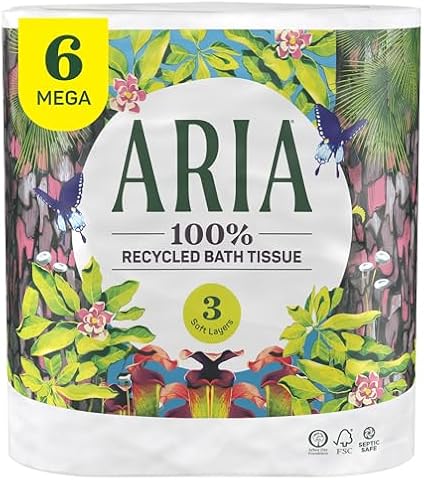
Three ply recycled for people who find recycled rolls too thin
- Material
- Bamboo & Recycled Fiber
- Credentials
- Tree-freePlastic-free
Closes most of the comfort gap that makes people abandon recycled rolls, without leaving the recycled camp.
No major drawbacks noted in testing.
The answer to the most common complaint about recycled paper, which is that it feels thin, is more plies. Aria sells a 3-ply recycled sheet: six rolls, 264 sheets each, 100% recycled fiber with no added inks, dyes or fragrances, in recyclable paper packaging. Aria states that each sheet is 25% thicker and three times stronger when wet than the leading recycled brand, which is the brand's claim rather than our measurement. Septic-safe and flushable.
The top three, compared
| Spec | Best Value BambooAmazon Aware 3-Ply Bamboo Toilet Paper (12 Rolls) | Best PackagingReel Premium 3-Ply Bamboo Toilet Paper (12 Rolls) | Best Bulk BambooCaboo Tree-Free Toilet Paper (24 Double Rolls) |
|---|---|---|---|
| Verdict | Solid | Solid | Solid |
| Composite | 3.9/5 | 3.9/5 | 3.9/5 |
| Materials | 5.0 | 5.0 | 5.0 |
| Health | 3.9 | 3.9 | 3.9 |
| Durability | 2.9 | 2.9 | 2.9 |
| End-of-life | 3.3 | 3.3 | 3.3 |
| Price | — | — | — |
| Get it | Check price | Check price | Check price |
How we score
What it’s made of.
Chemistry you’ll touch.
How long it lasts.
Where it goes after.
Each pick scores 0–5 on the four axes above, weighted into the composite verdict at the top. Scores are derived from what a product is verifiably made of and certified as — not how green its label looks.
About the author
Ruth Lopez
I'm Ruth Lopez and I'm a lover of nature and the environment. I'm very passionate about finding eco friendly products that don't damage the environment and also support companies that have the same philosophy.